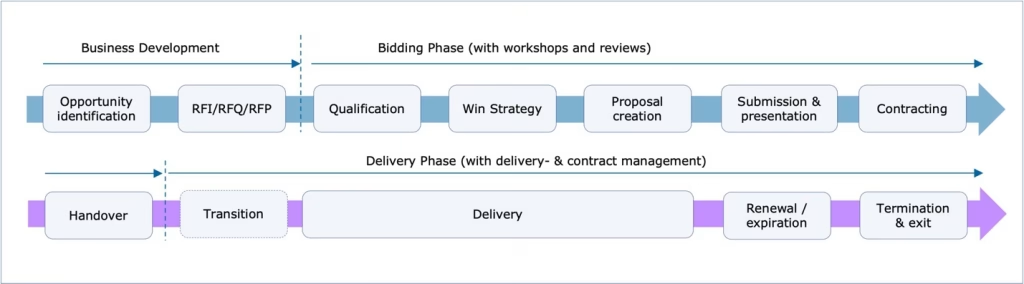
Numerous companies have started integrating AI into their operations, particularly within the sales process. In this context, I refer to the typical medium- to long-term sales cycles that are common in B2B enterprises. Throughout the entire chain—from Business Development and Bidding to Delivery—there are several tools designed to assist the sales process and significantly reduce manual tasks.
Too many tools

As an individual or as a business, you may have wondered which tools would be most beneficial for your company and what criteria to use when choosing between them. This inquiry likely led you to comparison websites that evaluate various tools and their features. If you haven’t explored this yet, we have already conducted a thorough analysis on the topic.

What have we learned from this? Firstly, that there is an abundance of tools available, each with varying reputations and qualities. As you might expect, conducting this research is not a straightforward task.

Additionally, it raises further questions. For instance: which features are most crucial for my sales process at this time? Should I focus on support for analyzing RFPs by identifying potential red flags, pitfalls, and risks? Is it essential for the tool to help in qualifying opportunities? What about facilitating collaboration—how important is that and in what way should it be supported?

Or should I more be looking for a product that can respond to Questionnaires? The tool would then have to use our own content, but how would it integrate? Or would I rather look for an agent that generates responses to RFPs received? And if so, would the tool be able to handle technical content? Preferably suited for my specific industry?

When considering tools beyond just RFP responses, should they also have the capability to create proposals independently, without a formal request?

Additional requirements

You may even find yourself searching for solutions that can support the entire sales cycle across its various stages, enabling collaboration among diverse sales teams. Naturally, you understand that you must start at a specific point in the sales process and can’t tackle everything simultaneously. However, it’s important to have the flexibility to expand and enhance your tools throughout the sales cycle as you gain experience. This means you’ll likely want assurance that the tool vendor will remain operational for a reasonable duration so that you won’t face challenges migrating when they discontinue support or go out of business.

Consequently, you begin exploring insights from analysts regarding the tool. You assess its performance history, gather feedback from references, evaluate its affordability, consider how to integrate it with your current infrastructure, and determine the training required for your staff to use it effectively. Most importantly, you focus on ways to enhance the tool’s results over time as your team gains expertise and the tool accumulates knowledge about your organization.

At Moonshot Lab, we’ve tested numerous tools ourselves and can confidently say that we were quite often pleased with the outcomes. However, we understand that we’re still a long way from endorsing one tool over another for every type of business. That said, we did collect valuable insights into what has been effective for us and what could potentially be beneficial for you in your unique circumstances. We are eager to continue learning and gaining more experience and understanding by sharing our insights with you.

Would you like to try for free?

Therefore, we are reaching out to anyone who dares to co-invest in this research. We will invest our expertise and time; you will invest yours. We will send you no invoice for our efforts and will support you in your search for a best solution. In return, we expect from you that you’ll grant us the sufficient rights to whatever insights may evolve from our joint investigation. We also want to carry on. Of course, your privacy and IP will be respected. We’ll sign a non-disclosure agreement upfront that protects your content, including your customer materials. And of course sign a Data Processing Agreement, if required.

So, if you’re a mid-size company of less than approx. 250 employees and you’re looking for a partner that wants to join you in your search efforts, feel free to contact us. Let’s discuss what you’re looking for and how we may help: free of cost. If our expertise and approach fits your requirements and your quest aligns with our research interests, we’re happy to collaborate.

Strategic Selling is typically characterized by long sales cycles, multiple stakeholders and complex decision dynamics. With AI getting more and more into the spotlights of business transformation, we may ask ourselves how AI will transform the practice of Strategic Selling. Will AI be just another tool for the sales professional or will it fundamentally change their way of working?

Large and complex deals are about gathering insights, building sales strategies and interacting with stakeholders. Upcoming AI technologies, such as machine learning, natural language processing and predictive analytics may very well transform the Strategic Selling profession.

From data to actionable insights

Starting with the time-consuming task of gathering insights, AI has a lot to offer. There’s usually a large volume of information that sales professionals need to gather and process. Think of relevant customer market trends, industry reports, customer financials and business strategy, competitor information and previous customer interactions.

By gathering large quantities of structured and unstructured data, AI can replace a lot of the work that was recently done manually. Moreover, AI can reveal patterns that used to escape the human eye. Use case are:

  • Opportunity Qualification: predictive models can evaluate opportunities based on closing chance, estimated deal size, strategic fit, contracting procedure or any other characteristic important to the seller.
  • Competitive intelligence: AI can reveal competitor pricing information, their recent sales strategies or competitor weak spots, that can be funneled into the deal team’s own sales strategy.
  • Stakeholder Analysis: natural language tools can analyze communications, social media or customer organization data to identify decision-makers or influencers. This will most likely also shed a light on their own personal wins.

As a result, sales professionals can obtain actionable insights that enable them to develop an effective sales strategy more quickly and with significantly less effort.

Improved responsiveness

Trust and credibility with diverse customer stakeholders are a prerequisite for any large and complex deal. Until recently, this required many hours of research and manual tailoring of proposals, customer presentations and other interactions. Today AI provides assistance:

  • Generative AI can write emails, compose draft proposals or presentations that are tuned to the customer’s business language, addresses all requirements and checks whether all customer criteria have been met. It can flag critical requirements.
  • Recommendation models can suggest which case studies, white papers, or customer stories are most likely to resonate with specific stakeholders. This will guide the sales professional to include them in the proposal.
  • Conversational AI can provide support during live calls or demonstrations by offering real-time prompts in response to customer inquiries, previous interactions with the client, or references to competitors.

Such a level of responsiveness is certainly more attainable when sales professionals are well-trained in utilizing AI effectively.

Reduced delays

The finalization of intricate deals frequently experiences delays, or in some cases, the sales process may be completely abandoned by the customer. This can occur when sales professionals underestimate the processing time on the customer’s end, overlook important decision criteria or stakeholders, or fail to align with the necessary procurement procedures. Predictive AI can play a crucial role in significantly mitigating this risk.

By analyzing historical deal data and live pipeline activity, AI systems can:

  • Alert when opportunities run a risk of getting delayed.
  • Suggest best timing for interventions, based on customer engagement signals.
  • Identify shortcomings in stakeholder management before these individuals hinder or complicate the sales process.

With proper use of AI tooling, deal teams are guided to intervene proactively, thereby reducing delays and improving win rates.

The augmented Sales Professional

As demonstrated earlier, AI is capable of managing the repetitive, data-intensive, and administrative tasks associated with selling. This enables deal teams to dedicate more time to areas where AI still falls short:

  • Building authentic human relationships.
  • Interpreting subtle personal dynamics from customer stakeholders.
  • Finding best solutions for ambiguous or political situations.
  • Taking the customer on a joint journey.

Strategic sellers who leverage the advantages of AI are likely to achieve greater success than dealmakers who primarily rely on traditional manual methods.

Pitfalls

However, the implementation of AI in sales processes comes with its own challenges. Sales professionals must navigate issues such as:

  • Privacy concerns: Analyzing customer communications or social profiles may raise concerns about their privacy. It may also lead to reduced customer trust.
  • Bias: AI models built on historical data can perpetuate existing shortcomings and may fail to recognize new best practices that are emerging.
  • Lack of transparency: Buyers might become wary of the selling organization’s true abilities if they feel that interactions are excessively automated or deceptive.

As a result, sales organizations must integrate new metrics into their governance frameworks. These should tackle privacy issues and guarantee transparency along with responsible usage. Additionally, bid teams will require training to utilize these new governance frameworks effectively.

New sales skills

As AI becomes integrated into the sales process, the capabilities of bid teams will develop. Contemporary sales professionals will have to:

  • Assess AI insights: they must learn to question AI outputs and apply their own professional judgment.
  • Incorporate AI tools: sales teams will need to be proficient in utilizing AI tools while ensuring effective collaboration with key organizational departments such as Marketing, Finance, Legal, and Operations.
  • Monitor market trends: Sales professionals must not only incorporate AI-generated insights into their existing deal strategies, but they also need to identify new AI-driven practices and advocate for their integration into the organization’s sales processes.

Undoubtedly, training programs will have to focus not just on conventional sales skills but also incorporate AI literacy. One of our upcoming Insight articles scheduled for later this year will provide further details on how AI can support the training of sales professionals.

Takeaway

Consequently, AI is expected to significantly transform the landscape of Strategic Selling. Visionary sales professionals will utilize more data, uncover deeper insights, and free up time for tasks that only humans can accomplish. They will increasingly concentrate on cultivating enduring partnerships that provide value to both their clients and their own organizations.

In the rapidly evolving landscape of financial services, the Netherlands is on the eve of a transformation in which artificial intelligence (AI) plays a central role. Financial institutions are facing complex challenges that require innovative solutions. AI consulting is evolving from a support service to a strategic necessity, with the integration of advanced technologies fundamentally changing how advisory processes are carried out.

This article highlights how AI is transforming the consulting industry and what opportunities and challenges this presents for clients, with a particular focus on the Dutch financial sector.

1. Strategic vs. implementation-oriented consulting: AI as a game changer

Strategic advice: The power of AI-driven decision-making

The strategic advisory practice is undergoing a revolution with the integration of AI technologies that accelerate scenario analysis and enable data-driven decision-making. Financial institutions face the challenge of adapting their business strategies to a rapidly changing market, with AI playing a crucial role in modeling future scenarios.

The added value of AI in strategic consulting lies mainly in:

  • Accelerated scenario analysis: AI tools can calculate thousands of scenarios in minutes that would previously take days or weeks, allowing banks and insurers to respond more quickly to changing market conditions.
  • Data-driven strategic decision-making: By combining various data sources, AI systems can identify patterns that remain invisible to human analysts, leading to more informed strategic decisions.

Implementation projects: RPA and AI for process automation

In addition to strategic advice, AI is also transforming implementation-oriented consulting, with Robotic Process Automation (RPA) combined with AI increasingly being used to optimize operational processes. In the Dutch financial sector, we are seeing increasing adoption of these technologies to automate compliance processes, administrative tasks and customer communications.

Concrete applications in the Dutch context are:

  • Automation of compliance checks: AI systems scan transactions and documentation for regulatory deviations, which is particularly relevant given the stringent compliance requirements in the financial sector.
  • Process optimization: RPA solutions automate document and data processing, which reduces error rates and increases efficiency.
  • Customer communications: AI-driven communication systems personalize customer information, such as ING Belgium’s virtual assistant “Ida,” which processes more than 70% of customer requests without human intervention.

However, a key risk in these implementations is the over-reliance on AI models without adequate human validation. Research shows that only a quarter of Dutch people are optimistic about the use of AI by financial institutions, underscoring the importance of human verification.

2. Client benefits vs. new risks

💡 Opportunities: Efficiency, transparency and predictive capability

The integration of AI into consulting services offers clients in the financial sector significant benefits:

  • Cost reduction through more efficient processes: AI tools analyze RFPs (Request for Proposals) up to 70% faster than traditional methods, leading to significant time and cost savings in the procurement phase of consulting projects.
  • Real-time dashboards for transparency: AI-powered dashboards provide clients with continuous insight into the progress and results of consulting projects, increasing transparency and enabling adjustments.
  • Predictive analytics for risk management: Advanced AI models identify potential risks at an early stage, which is particularly valuable for financial institutions.

Dutch financial institutions that have implemented AI report operational cost savings of up to 30-40% and a significant improvement in the quality of decision making.

⚠️ Pitfalls: Standardization, ethical dilemmas and cybersecurity

Against these benefits, however, there are also substantial risks that require careful attention:

  • Excessive standardization of consulting: AI systems tend toward standard solutions based on historical data, which can lead to a lack of customization and innovation in consulting advice.
  • Ethical dilemmas in algorithmic decision-making: AI models may contain unintended biases that lead to unfair or discriminatory outcomes, a risk particularly relevant in the financial sector.
  • Cybersecurity risks with sensitive data: The large-scale processing of personal financial data by AI systems increases the attack surface for cybercriminals, which requires specific security measures.

3. Selection criteria for AI-driven consulting assignments.

For Dutch clients considering AI-driven consulting services, careful partner selection is essential. The following checklist provides guidance for this decision:

Does the party have a clear AI governance framework?

A robust AI governance framework is crucial to ensure ethical, transparent and compliant AI practices. Clients should verify that potential consulting partners have:

  • Clearly defined roles and responsibilities for AI oversight
  • Procedures for identifying and mitigating bias in AI models
  • Compliance mechanisms consistent with Dutch and European regulations, including the EU AI Act

How is explainability of AI decisions ensured?

Explainable AI (XAI) is essential to building trust and complying with regulations. Clients must verify that consultants:

  • Using transparent AI models whose decision making is traceable
  • Have methodologies to make complex AI decisions understandable to non-technical stakeholders
  • Conduct regular model reviews to ensure the quality and reliability of AI outputs

Is there a hybrid human-AI workflow?

The most effective AI implementations combine technological capabilities with human expertise. Clients should evaluate whether consultants:

  • Taking a balanced approach where AI automates repetitive tasks while human experts focus on strategic decision-making
  • Engage senior experts in the interpretation and validation of AI-generated insights
  • Have clear protocols for situations where human intervention is necessary

4. AI in the sales phase: RFP revolution for financial projects

The transformation of consulting services starts as early as the sales phase, where AI is revolutionizing traditional RFP processes. An illustrative case study from the Dutch financial sector shows how a mid-sized bank realized 70% time savings by implementing AI-driven RFP analysis.

This bank implemented an AI solution that included three core components:

  1. Natural Language (NLP) for parsing complex issues: Natural Language Processing algorithms analyzed RFP documents in minutes instead of days.
  2. Dynamic pricing models based on historical quotation data: AI systems analyzed historical quotation data to generate optimal pricing models.
  3. Automated content generation: Based on a centralized knowledge base, the AI system generated initial content for proposals.

Conclusion: Balancing between innovation and responsible use

The transformation of AI consulting offers Dutch financial institutions unprecedented opportunities to address complex challenges more efficiently and effectively. At the same time, implementing these technologies requires a careful balancing of risks and benefits.

For clients considering AI-driven consulting services, the following actionable tips are essential for risk mitigation:

  1. Implement a phased approach: Start with small-scale AI pilots before moving to large-scale implementation so that risks remain manageable.
  2. Invest in AI literacy: Make sure your organization has sufficient knowledge to critically evaluate AI recommendations.
  3. Demand transparency and explainability: Do not accept “black box” solutions, but insist on transparent AI models.
  4. Develop a robust governance framework: Define clear responsibilities, ethical guidelines and control mechanisms for AI implementations.
  5. Adopt a hybrid approach: Combine AI capabilities with human expertise to leverage the benefits of both worlds.

With the right approach, AI consulting can be a powerful catalyst for innovation and efficiency in the Dutch financial sector while effectively managing risk. The key to success lies in a balanced approach that combines technological advances with human insight and ethical considerations.

Stephan Linnenbank is consultant and  supervisory board member

Is there a link between an entrepreneur’s personality and the performance of their company?


A recent study published in Nature Scientific Reports analysed data from over 21,000 startups and found compelling evidence that certain personality traits among entrepreneurs correlate with higher chances of success.​

Key findings include:

  • Successful entrepreneurs often exhibit traits like openness to new experiences, high energy levels, and a willingness to be the centre of attention.
  • There isn’t a single “entrepreneurs personality type”; instead, six distinct personality profiles were identified among successful entrepreneurs.
  • Startups with diverse founding teams, in terms of personality, tend to perform better, highlighting the value of psychological diversity.​

These insights underscore the importance of understanding team dynamics and personality compositions in the entrepreneurial journey.​

Link to the study here.


Can You Really Measure Leadership?

The case for turning executive behaviour into data (without losing the human touch)

We all know leadership when we see it — or do we?

Ask ten people to define “great leadership” and you’ll get ten different answers: visionary, empathic, decisive, analytical, humble, bold. The problem? We talk about leadership like it’s an art, but we run companies like it’s a science. That mismatch gets expensive.

So, here’s the real question: Can you actually measure leadership? And if you can, should you?

The Impact of Leadership

In research we find that leadership makes a difference: pioneers like Fred Kiel (Return on Character) and Jim Collins (Good to Great) showed that character, humility and execution power have a direct impact on performance. Thinkers like:

  • Daniel Goleman – brought emotional intelligence to the heart of leadership.
  • Robert Greenleaf – showed to impact of servant leadership.
  • Edgar Schein – showed how leaders influence culture through the undercurrent.

The Leadership Paradox

Leadership is widely accepted as one of the most important drivers of organizational success. Yet, it is also one of the least measured and most misunderstood dimensions of business performance.

In most companies, leadership effectiveness is assessed informally: gut feeling, vague feedback, and political consensus. The result? High performers go unrecognized, and blind spots remain unchallenged.

And in founder-led or fast-growing companies, the stakes are even higher: leadership behaviour directly shapes culture, speed, and resilience.

Why Measurement Matters

The old adage holds true: what gets measured gets managed. When we fail to measure leadership, we:

  • Let assumptions drive strategic decisions
  • Overlook risks in team dynamics
  • Miss chances for growth through self-awareness

In scale-ups, leadership friction is often the invisible force behind missed targets, failed transitions, and employee churn. You can’t fix what you don’t see.

What Can Be Measured?

No, we can’t put a number on someone’s ability to inspire. But we can measure patterns of behaviour that shape how people lead:

  • Personality traits — with tools like the Enneagram or Big Five
  • Communication styles — how direct, empathic, or factual someone tends to be
  • Decision-making patterns — risk tolerance, speed, intuition vs. analysis
  • Influence style — formal vs. informal, visionary vs. practical
  • Team dynamics — how well different leadership styles complement or clash

These dimensions are observable, consistent, and measurable over time.

Measure Without Reducing

There’s a risk here: turning leadership into a scorecard. That’s not the point. Measurement should support understanding — not oversimplification. The best models don’t rank leaders. They give them a mirror. Measurement is powerful when it helps leaders:

  • Reflect on their patterns
  • Understand how others experience them
  • Balance their instincts with new behaviours

It’s about growth, not grading.

What We’re Learning at Kode360

At Kode360, we use People Insights to map leadership personalities across key dimensions like communication, conflict handling, and decision-making.

Through our MBA research at Nyenrode, we’re now exploring how those leadership profiles correlate with company performance. Early signals show:

  • Teams with balanced personalities make faster decisions
  • Diverse communication styles improve problem-solving (if they’re understood)
  • Certain personality clusters correlate with growth slowdowns — especially around control and delegation

This isn’t about labelling people. It’s about helping leadership teams work better together.

So… Can You Measure Leadership?

Yes — if you measure to understand, not to judge.

The best leaders want to be measured. Not to win a score, but to grow. They know leadership isn’t about being perfect — it’s about being aware, adaptable, and ready to lead better tomorrow than they did today.

When you have to make a document, whether a proposal, an offer or a presentation, you often need contributions from colleagues or partners. But even if you are the sole author, follow these steps:

  1. Define the objective: what is the message you want to get across?
  2. Think of the audience: to whom are you delivering the message?
  3. Create a Table of Contents (ToC): how to structure the message? The ToC is the skeleton of your story. And create headings in the ToC that reflect what you want to get across and that appeal to the brains and the heart of the audience.
  4. Define the style of the document: formal or informal, commercial or technical, textual or graphical, and make sure the style relates to the objective and the audience.
  5. Create a Storyboard that adds some flesh to the skeleton: add outlines of the content, written or visualized in the proper style, to the headings. It doesn’t need to be perfect (yet), only clear and instructive!
  6. Define the maximum number of pages per heading and make sure your document does not exceed 15 pages (or slides). Nobody will read any document beyond 15 pages!
  7. If you really need more pages, create appendices. And create headings for the appendices in such a manner that any reader can immediately discover what appendices to read and what appendices to skip.
  8. Also create Storyboards for the appendices: add outlines of content.
  9. Choose a document template that reflects the style of the document.
  10. Enter the Table of Contents and the Storyboard in the template. You’ve now made a document in the appropriate style, with the appropriate headings and an outline per heading.
  11. Write the Introduction that delivers the message you want to get across in the style that appeals to the audience and briefly introduce the structure of the document. And write the Conclusions that you want to arrive at, again delivering the message you want to get across in the style that suits the audience.
  12. Check your Introduction and Conclusion: have you said it as concise and clear as possible?
  13. Have your document assessed by somebody that knows and understands both the objective and the audience, if you haven’t done this earlier.
  14. Instruct your co-authors that one picture may say more than a thousand words but be sure to have the right type of pictures.

When more authors are to contribute to the document, they can now understand what is expected from them. But have only one editor who ‘owns’ the document and who will make sure that all its content is aiming to deliver exactly the right message to the specific audience in the chosen style.

Sometimes issues cannot be tackled with professional interventions alone. When it comes to personal effectiveness, it is actually always about behaviour. And we learn behaviour throughout our lives. I often use the metaphor of the sandbox. If you put two two-year-olds in the sandbox and one wants the other’s shovel, a two-year-old has roughly two behaviours ready. Take the shovel away and ignore the other’s resistance, or start crying and hope that your father or mother will come to help. Over the years, you learn more behavioural alternatives and your preferred behaviour is also formed.

Your preferred behaviour is not necessarily determined by what happens, but by your thoughts about it. Thoughts about yourself, about the other person or about the situation.

For example, should you actually take a step forward in a sales conversation? Then it will work better if you have helpful thoughts and feelings: it really makes sense that I am now taking a step forward, I can really make a very nice bridge to what I know, I am enjoying this conversation, I can afford something, he or she will certainly appreciate that, it’s an appropriate moment in the process, etc. On the other hand, you can also have thoughts that prevent you from taking that step forward: modesty is a virtue, I will just let him or her talk, I don’t think I can add anything sensible, I’m a bit wary of his or her sharp reaction, this is not the time, I will do it next time.

For all these thoughts, you do not notice them (just like that), because 95% of what we do is unconscious, but these thoughts are there.

In coaching, we usually do two things:

  • We practice more effective behaviour, on the spot. This often has to do with effective communication and positioning. There are many patterns and regularities in this and therefore more possibilities for influence than you might think.
  • Secondly, we look at the thought structures that underlie your behaviour. Awareness of this starts the conversation with yourself. What do you want to be guided by? And what do you want to let go? And how do you do that? Only then can you also anchor a more sustainable behavioural change.

And then, then you can go back into the sandboxes of the working world with more alternatives 😊.

They look bored at their shoes, check their Whatsapp or worse, they openly answer their emails: listeners with the attention span of a goldfish. The increasingly volatile way in which we consume information visibly decreases our ability to concentrate. According to a controversial Microsoft study, we would keep our attention even worse than a goldfish: 8 versus 9 seconds. Fortunately, this turns out to be an urban legend, but it remains an interesting question: how long can you actually keep your listeners captivated? And which presentation format goes with it?

The American researcher Bryer researched this. He compared lectures of 20 and 50 minutes with each other, with identical subjects. Immediately afterwards, he tested what the students remembered. A few weeks later, he asked again what they had remembered from the lecture. And guess what: the students who had followed the short version retained as much information as the students who had attended a 50-minute lecture.

So, presenting briefly seems like a good idea. But how do you go about it, and which presentation formats are best to use? To help you get started, I’ll share some of the best-known short presentation formats with you, from 18 minutes to thirty seconds, and discuss their pros and cons.

18 minutes: the TED Talk

The TED presentation format challenges speakers to give the ‘presentation of a lifetime’ about their expertise in a maximum of 18 minutes. The talk should not contain heavy theoretical fare, and should be made as accessible as possible. In addition, absolutely nothing may be sold, the goal is to contribute to a better world by sharing knowledge. The TED talk is seen in America as the gold standard for contemporary presenting. The format was developed in 1984 during the first Californian TED conference (Technology, Entertainment, Design).

The advantage of this form is that, if done well, it bites away nicely. It is therefore made for a less involved audience, with little prior knowledge and a limited attention span (because on YouTube). The disadvantage is obvious: this form does not really work out well if your audience is highly involved and wants to go into depth. That happened when a scientist gave a TED-like talk to a grant committee. It especially irritated them: they needed statistics and theoretical foundations to grant subsidies, not cool anecdotes.

The recognizable structure and style of the TED talk is brilliantly mocked during this talk. It flawlessly exposes the techniques of the TED speaker: from the ‘conversational style’ of speaking, to the smooth interactions with the audience and the personal outpourings. Feast for both fans and haters.

6 minute 40: PechaKucha

PechaKucha is a presentation format in which you are instructed to speak on the basis of 20 slides, each of which remains on screen for 20 seconds. This results in a story of exactly 6 minutes and 40 seconds, with as little text as possible being used on the slide.

The PechaKucha presentation was developed in 2003 by two architects working in Japan, Astrid Klein and Mark Dytham. PechaKucha is Japanese for ‘chit chat’. The whole idea behind this form is delayed telling, or as they say themselves:

“We want people to stop and look, listen and think about the presentations and that is really, really important; it’s kind of like a Zen form of presentation.”

PechaKucha Nights are held all over the world, including in the Netherlands. Although the popularity of this form seems to have declined in recent years. The advantage of PechaKucha is that the speaker has to get to the point in a short time and make the story visual.

The downside is that it requires a strong performer, with a good sense of timing (20 seconds are a very long time if you drop a silence too early). Personally, I think the biggest disadvantage of this form is that 20 x 20 seconds leaves no room for dynamic variation at all, it is a cadence that suits an informative story better than a convincing one.

Handy: a PechaKucha presentation about a PechaKucha presentation. No satire this time, but a clear manual if you want to get started with this form yourself. So keep in mind that this format requires a lot of preparation.

3 minutes: FameLab

The FameLab format was developed in 2005 for the English Cheltenham Science Festival, but is now used all over the world. The speakers (always scientists) give a presentation of up to three minutes in which they explain their idea to a general audience. No slides may be used and the subject is always in the field of STEM: Science, Technology, Engineering, Mathematics. The goal is to involve an audience without any prior knowledge in their field. A jury of communication experts assesses the stories on ‘the 3 C’s’: content, clarity and charisma.

The strength of this format lies in its length, of course, and challenges scientists enormously:

“My FameLab experience helped me to understand better how to convey my research, how to dissect the key information from the huge body of data. When you have only 3 minutes – every second counts.”

Working within this format is a learning experience in itself for many scientists, but the disadvantage is of course that you can only make, explain and illustrate one point. Those who want to get rid of more content will inevitably get stuck.

This winning FameLab talk shows the power of the concept. The structure is super simple: an illustration (a fish in the big sea looking for coral), with an explanation (what is actually happening here?) and a clear statement (sound helps restore the coral). Because the illustration takes the form of an anecdote, we are hooked from the first moment and we effortlessly retain the content.

30 seconds to 2 minutes: the elevator pitch

During an elevator pitch, you share an idea for a product, service, or project. The idea behind it is that you can tell your story in the time when an elevator goes from the bottom to the top floor: about 30 seconds to 2 minutes. The format is often simple. A short attention grabber, a problem statement, the solution (the message) with an elaboration of the benefits and a call to action.

The elevator pitch was initially mainly used by entrepreneurs who wanted to get financing from a venture capitalist. But nowadays it is also used during networking, to profile yourself powerfully. It is an exercise in itself: can you tell your story clearly and appealingly within two minutes, and at the same time connect with the other person? This is really about the essence of the essence, the form forces you to make radical choices. And that you can tell a surprising amount in a minute and a half, is shown by the winning pitches of the TV show Dragon’s Den.

The disadvantage of this form is of course that there is no room for deepening. But being complete is not the goal here: the other person should want to know more as a result of your pitch. A strong elevator pitch challenges a dialogue. It’s the beginning of a conversation, not the end.

This Dragon’s Den pitch for Gener8 shows how much you can say in a minute and a half. Here too, the story shines with clarity. The structure is classically rhetorical: an attention-grabber that effortlessly continues into a problem statement, which in turn raises a question. This question is then answered with the core message (Gener8 wants to change this), substantiated with three practical arguments and concluded with a call to action. Excellent example.

Prefer longer?

Sometimes 20 minutes are really too short, because there is a lot at stake, for example, or because there is a lot involved in your proposal. If you want to present for longer, realize that the concentration of your audience makes an undulating movement: after an adjustment period of 2 to 3 minutes, your audience can concentrate for 10 to 18 minutes. After that, the concentration temporarily drops and a little later it recovers. The tension that follows becomes shorter and shorter, even to 3 to 4 minutes at the end of a 50-minute presentation.

So for a longer presentation, choose a strong, dynamic and challenging structure. If your story is convincing in character, you can use the rhetorical or story design story structure. This structure is based on the psychological principles behind becoming convinced. It takes your listener step by step into your new world, and lets them draw and internalize the right conclusions themselves. It is crucial that you ensure sufficient variety between statements, substantiations and illustrations.

Say it, explain it and above all show it. This way your listener gets new stimuli every time. And last but not least: connect with the thinking and living environment of your audience. Because if they recognize themselves in your story, they suddenly have a surprisingly long attention span.

Natalie wrote this article for Tekstblad Premium, where it appeared earlier.

Want to know more about designing strong stories? Read  more about our presentation training courses here.

The world is going through major transitions. What is promising technology today may be obsolete tomorrow. This has a big impact because (1) it often involves large investments and (2) market success depends heavily on the right technology choices. Modularity provides the best options to build in sufficient flexibility, and that includes a different approach to contracting. A customer perspective.

First some context: In a time of great change, how do you predict which technological and social developments are relevant to your organization? Numerous examples show how difficult that is.  Kodak, Nokia and Blackberry are textbook examples where things went historically wrong. But even today’s big technology companies sometimes get it wrong (Google Glass, Facebook Libra). Investment dilemmas play out in virtually every industry. For example, should carriers now rely on electricity or hydrogen for their heavy trucks? And, most topically, what AI applications should an organization put its money on?

Making choices

The challenge: Organizations must make choices in a rapidly changing world but at the same time want the freedom to respond quickly and flexibly to changing circumstances. This is possible by breaking down the technology (and thus one’s own organization) into modules. There are opportunities for this in many markets: many tools and services, for example in the field of compliance, are offered in modular form.

Those who use them can often implement such a module more easily than a total solution and – more importantly – have more freedom to make other choices later. This is useful, for example, if it turns out that a supplier did not bet on the winning horse.  A module is then relatively easy to replace with a module from another provider without major modifications to other components. To some extent, it can be compared to Lego: the blocks (unlike the toys) are available from different suppliers and fit or can be made to fit. In an ecosystem, suppliers make it easy to combine each other’s applications. Working with modules provides major advantages in day-to-day operations compared to total solutions. Take, for example, a bank that wants to change the way interest rates are calculated. For a conventional bank with legacy systems that is a lot of work, requiring changes in many places. Modern banks can easily do that in their interest calculation module that is linked to the relevant other systems. DeepSeek seems to owe part of its greater efficiency to a modular structure.

Thinking carefully about similarities

Modularity also has advantages in relations with suppliers: the supplier does not so easily gain an overly dominant position over the customer (“lock-in”) and cannot exploit the customer commercially based on that position – a practice that is quite common in conventional total solutions.  The legal assessment of contract terms can then be limited to what is promised: who has what responsibility, how is liability regulated, terminability (and the ability to use it) and compliance. So the context determines the extent of legal attention.

Yet “lock-in” is even conceivable in the case of using modules. For example, if there is no good alternative for a module, or switching between modules is costly. In addition, modularity in an ecosystem also has a potential disadvantage: if different parties have a good ecosystem together, it may become more difficult to use modules from outside that ecosystem. Modules then become entangled with the environment they are in – through data connections or ease of use. The promised flexibility of the modular approach then encounters its limits and the customer cannot get away properly – lock-in effects occur. Then more legal conditions are important, for example in terms of price protection. As a customer you do not want to commit yourself to a longer term, but since you cannot easily leave, either, renewal options without exorbitant price increases are important. In addition: the longer the agreement lasts, the greater the chance that the initial need and contracted capacity no longer fit the later existing need: then it helps tremendously to have agreed prices for capacity adjustments. More protection may also be needed in terms of further development of the product or service.

Finally, it is also important to negotiate protection against unreasonable price increases in divestitures, acquisitions and mergers. After all, technological disruptions can lead to a wave of consolidation. Companies that have made the right development in time can often exploit this by growing rapidly, for example through acquisitions. Companies that have missed the boat may benefit from a combination with a party that has actually developed further. Then it’s nice if the contracts that deal with the technology provide for the possibility of using that technology more broadly without paying the top price.

Thus, legal attention can help better realize the benefits of modular organization and procurement.

Bart van Reeken, advocaat/attorney, Van Doorne, Amsterdam, February 16th, 2025

Too valuable to part with, yet not perfect

At times, the stipulations imposed by a prospective buyer can be quite concerning. It’s typical for vendors to shoulder all their expenses without any assurance that a contract will ultimately be granted. Additionally, a buyer often retains the right to halt the purchasing process at will, without any obligations or reasons provided. Such conditions, among others, can be disheartening—especially when you sense that these terms favor one or more of your rivals. What steps can you take in response?

First and foremost, you are not obligated to meet every request from a buyer. If the suggested process or terms are completely unappealing, it may be best not to submit a formal response at all. Often, an opportunity can seem too good to pass up, even if some of the stipulations are frustrating. While your general approach should be to accommodate as much as possible, there may be certain conditions that go too far. This could lead to additional stress if those conditions are deemed ‘knock-out’ criteria by your potential client. Refusing these terms might disqualify you from consideration, and you can trust that your competitors will be closely monitoring whether the criteria are enforced. Therefore, any decision to deviate from the established rules must be intentional, with all possible repercussions carefully evaluated.

Suggest modifications to the conditions

That doesn’t mean you have to accept every demand placed upon you. If you choose to take the risk of being excluded, it’s because you’d rather be removed from the list than stay involved under terms that don’t sit well with you. In such situations, it’s important to assert your position: clarify what you’re unwilling to accept and outline what alternatives you’re offering in return. Highlight why these alternatives would be beneficial for all parties involved. Often, there’s an opportunity to initiate a separate process outside of the RFP that could prove more advantageous for both the buyer and the vendor.

Based on our experience, it’s often beneficial to look for a deeper motive behind the RFP. There is usually a business objective driving the inquiry at hand. For instance, a bicycle manufacturer seeking designs for a new model may have realized it’s losing market share due to its delayed response to emerging trends (a real-world example). Similarly, a leader in robotic manufacturing might not only be after technical skills, as stated in the RFP, but could also be searching for a strategic partner capable of attracting new customers (another real scenario). If you can offer something that aligns more closely with what your potential client truly needs from a business standpoint, there’s a good chance you’ll have an engaging discussion about it with your prospect.

Two real-world examples

Just to spark your imagination and explore the possibilities that may arise from this.

Case 1: A major multinational financial institution issued an RFP for storage hardware to meet its increasing IT storage needs in the office environment. This surge in demand was largely driven by unchecked email usage, poor collaboration management, a rise in graphics and video content, and, most notably, the unrestricted creativity of end users who were developing IT solutions that the official IT department was unable to deliver.

Rather than simply supplying the requested hardware, the hardware vendor partnered with a service provider and initiated discussions with the customer on how to manage the rapid growth in storage needs. In summary, both vendors ultimately secured a long-term managed storage outsourcing contract, valued at least ten times greater than what was originally outlined in the RFP.

Case 2: A small bank had invested several million euros in a new payment and savings system that provided them with a notable competitive edge in the market. However, due to their restricted business volume, they found it challenging to manage the maintenance costs of the new system. As a solution, they initiated a ‘beauty contest’ to choose a service provider capable of assisting them in lowering these expenses.

Instead of competing with other providers and responding to numerous (in the provider’s opinion) irrelevant questions, one service provider presented a completely different proposal. This provider had recently acquired a company that had also invested in a similar system using the same technology. Their offer to the bank was: let’s collaborate in Europe and establish a Shared Service Center for payments and savings. They proposed utilising the bank’s investment for the Bank’s local market while leveraging the provider’s investment for other European markets, thus sharing the advantages of economies of scale. The outcome? The bank and this provider formed a strategic partnership, leaving the original competitors unmentioned from that point onward.

Creativity brings rewards

The takeaway from the above is that while it’s typically wise to adhere to the buyer’s established rules, there are valid reasons to attempt altering them. Even if this poses a risk of being excluded from the buying process. When contemplating how you would like these rules modified, you might as well consider crafting a significantly improved offer that better addresses your customer’s business needs. Focusing on your customer’s strategic goals and making an effort to align with them can truly yield beneficial results.

Should you invest in RFPs you didn’t see coming?

At first glance, your response to this scenario might lean towards the negative. Crafting proposals consumes precious time from your team, incurs costs, and is typically pursued only if there’s a reasonable expectation of securing a contract that would recoup your investment.

However, there are instances when unexpected requests for proposals arise. You may have never interacted with this potential customer (the “prospect”), nor considered whether they would be a suitable client or if you could bring something valuable that they require. In fact, you know very little about this company. Yet unexpectedly, they invite you to submit a proposal. Perhaps they’ve come across your name through various channels. Or an advisory firm has recommended to include you in their list of potential vendors. What course of action will you take?

Assessing an RFP: what is NOT mentioned?

If you don’t dismiss the idea of proposing straight away, you’ll probably study the request for proposal (RFP). Is it clear to you what they want? Is there an opportunity to ask clarification questions? If it’s sufficiently clear what they need, can you provide that? What revenue would that represent? What buying process do they propose and is that attractive to you? Can you meet their time scales? Are they transparent on the companies they invited to propose? Can you beat them?

You’ll likely concentrate on the details outlined in the RFP, which could lead you to overlook important aspects that aren’t mentioned. What is the current business environment they are operating in? How does their market appear? What insights do industry analysts provide regarding them or their line of business? What is their overarching business strategy? Is this RFP connected to any of their strategic goals or challenges? Are there additional ways you could support them, perhaps with a unique service that they didn’t specify in the RFP?

You have a sense that this opportunity might evolve into a deal, but you’re unclear about how to proceed. While you may wish you had conducted some preliminary research and analysis earlier, it’s now time to decide your next steps. How do others deal with such situation?

Deal Qualification is most often not ideal

You might be familiar with structured Deal Qualification processes. The sales team must respond to numerous questions regarding the opportunity, and their responses are placed on an attractiveness scale. Common dimensions include prospect atractivity, opportunity suited for your organisation, competitor strength, and internal capabilities. Frequently, this qualification process results in a Go decision, primarily because certain factions within your organisation have a vested interest in chasing the opportunity. Whether justified or not, you opt to proceed with it. What follows?

Go for it: making up for research you didn’t do

The team typically strives to compensate as much as possible for the challenge of lacking customer insights and relation. Information is collected promptly, and every chance for engaging with the customer is fully leveraged. Usually, the most relevant competitors are identified quickly, allowing you to discern their standing with your prospect. Although your prospect may claim that there’s an equal opportunity for all competitors, this assertion is rarely entirely accurate. As in any sales cycle, you’ll eventually reach a conclusion—sometimes resulting in a signed contract and other times not. In either scenario, you’ll assess your performance, ideally incorporating feedback from your prospect. It’s not unusual for a lost opportunity to be attributed to the setback of starting late: lacking customer or opportunity information can be a serious hurdle.

Lessons learned, and a recommendation

Undoubtedly, responding to RFPs that arrive unexpectedly is far from ideal. However, such opportunities do arise at times, and you may not always be in a position to simply pass them up without making an effort. Remember that your organization can creatively justify why you should consider responding. Additionally, the prospect or their advisor might have motives for inviting you beyond a genuine intention to award you a contract. Benchmarking does occur frequently in these situations.

The best approach is to be particularly discerning during the qualification process and find ways to compensate for the lack of established relationship and insight. For instance, by requesting additional interactions—such as arranging a board-level meeting—to confirm mutual intentions and assess strategic alignment between both companies. This may require some flexibility in the process, which your prospect may not favor. Purchasing departments often resist these kinds of interventions.

Nevertheless, it’s crucial to establish direct contact with the decision-maker and ensure they understand you’re willing to take on the risk of investing time and resources into this opportunity based on their promise that you’ll get a fair chance. If doubts arise at any point during the sales process, you always have the option to withdraw from pursuing it and minimize your expenses.

Scroll to Top